
MAN: Low demand cripping N302bn local vehicle plants
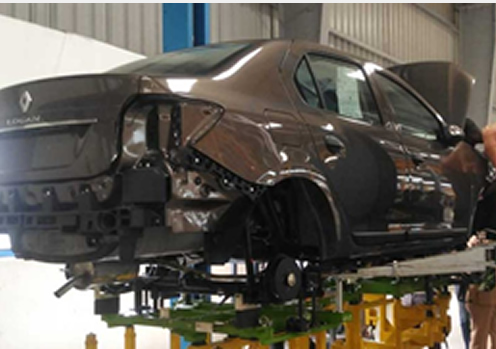
Nigeria’s vehicle assembling industry, estimated to be worth around N302bn, has tanked to a new low due to increasing production costs and weakened demand for locally assembled automobiles.
According to the recently released Manufacturers CEOs Confidence Index, activities of motor vehicles and miscellaneous assembly deteriorated further below the benchmark (50 points) from 48.6 to 46.7 points.
The report said this was due to unpalliated subsidy removal, reduced sales, and low demand for new vehicles because of the eroded disposable income of the consumers.
The plunge to 46.7 points takes the business condition of the subsector close to pandemic levels when it went as low as 45.25 points.
It is also the lowest point (besides figures recorded during the pandemic) recorded from available data.
An analysis of MAN’s MCCI showed that the sub-sector posted negative readings across all indices used to measure the performance of MAN’s composite sectoral groups, making it the least-performing sector within Nigeria’s manufacturing ecosystem.
For example, in the second quarter of the year, players in the sector saw production and distribution costs soar by 17.3 per cent, while cost of shipments increased by 14.7 per cent. Capacity utilisation in the sector dropped by 5.6 per cent, forcing local assemblers to cut their workforce by 5.7 per cent during the period.
Other indices which posted negative readings were volume of production ( –6.1 per cent), change in investment ( –5.6 per cent) and change in volume of sales ( –6.3 per cent).
According to MarketResearch, the country’s automotive manufacturing industry raked in $400m in 2022 (N302bn).
Major players in the industry include Innoson Motors, Coscharis, Mikano Motors, among others.
Prior to 2014, when a policy for the automobile industry was released, giving license for automobile dealerships in Nigeria, the importation of used cars had threatened to wipe up the gains of partnerships forged by the Nigerian governments with foreign car manufacturers in the 1970s
The Federal Government’s Automotive Policy of 2014 was geared towards providing a framework that would support automobile companies to boost local content and establish a vehicle financing scheme that would provide funds for citizens to buy new cars.
However, despite the policy, the government’s refusal to patronise locally manufactured vehicles, coupled with poor regulations, has constituted an albatross on the neck of the industry. Currently, Nigeria produces less than 10 per cent of the vehicles used in the country.
Despite the challenges plaguing the industry, it has in the last few years managed to record some positive strides.
Culled: punchng.com