Justice Knows No Tribe: Ejiofor Salutes Omotosho Over Acquittal of 50 Igbo Detainees
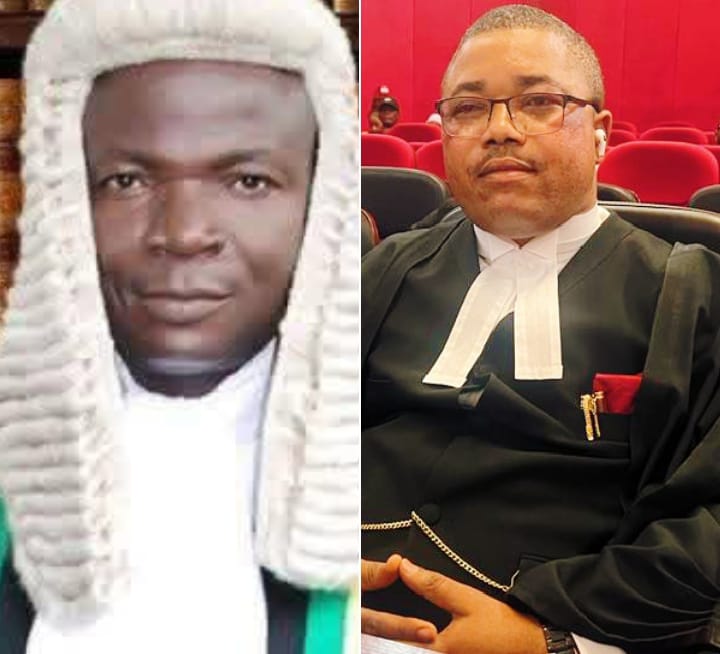
Justice James Omotosho and Sir Ifeanyi Ejiofor, Esq
Says Appeal Court Justice upheld rule of law, ethnic neutrality and judicial compassion despite security pressure
An Anambra-born human rights lawyer and lead counsel to the Indigenous People of Biafra (IPOB), Sir Ifeanyi Ejiofor, Esq. (KSC), has paid glowing tribute to Justice James Omotosho of the Court of Appeal, describing him as a courageous, principled and compassionate judicial officer whose commitment to the rule of law transcends ethnic, religious and political considerations.
Ejiofor, who congratulated Justice Omotosho on his elevation and swearing-in as a Justice of the Court of Appeal, recalled how the jurist demonstrated exceptional judicial courage and integrity while presiding over the trial of more than 50 young Igbo men and women arrested at a funeral ceremony in Anambra State in December 2022 and subsequently charged with terrorism and other serious offences.
In a congratulatory tribute titled “When the Scales of Justice Refused to Bend: A Tribute to the Courage, Integrity and Judicial Excellence of Hon. Justice James Omotosho,” issued on Wednesday, November 18, 2026, Ejiofor recounted his courtroom experience with the judge during the trial, which he said culminated in the discharge and acquittal of the defendants after the court upheld a no-case submission filed by the defence.
Ejiofor, who described his experience as an active litigation practitioner, prosecutor and eventual legal practitioner at the Bar as having shaped his appreciation of judicial excellence, argued that judicial appointments should reflect a thorough understanding of the practical demands and intricacies of legal practice.
He, however, expressed concern that some recent judicial appointments appeared to have departed from this trajectory, a development he said could negatively affect active litigation practitioners and litigants, although he reserved the issue for another discussion.
Recounting the circumstances that brought him before Justice Omotosho, Ejiofor said that in December 2022, more than 50 young Igbo men and women, including young mothers and fathers, were arrested during a funeral ceremony in Anambra State, allegedly labelled members of the Indigenous People of Biafra (IPOB), and subjected to what he described as severe torture, prolonged incarceration and degrading treatment before being transferred to Abuja.
He alleged that some of the detainees were subjected to further brutal treatment in Abuja, including being chained by their legs and hanged, while three young men reportedly lost their lives in the course of the ordeal.
The human rights lawyer maintained that the victims had committed no offence known to law, alleging that their arrest and subsequent prosecution reflected a disturbing pattern of ethnic profiling and collective persecution under the administration of former President Muhammadu Buhari.
He said he took it upon himself to vigorously pursue their cause and explore every lawful avenue to secure their freedom, an undertaking that involved fierce legal battles.
According to him, the defendants were subsequently arraigned before the Federal High Court, Abuja, on several serious charges, including terrorism, membership of a proscribed organisation and other related offences.
Despite the gravity of the allegations and the possibility of severe punishment, Ejiofor said he remained convinced that the prosecution lacked credible evidence capable of establishing the defendants’ culpability.
He recalled reassuring the distressed relatives of the detainees that there was reason to thank God because their loved ones had eventually been located and brought before a court of competent jurisdiction after what he described as a difficult period of uncertainty and detention.
The case was subsequently assigned to Justice James Omotosho of the Federal High Court, Abuja.
Ejiofor admitted that his first appearance before the judge initially gave him the impression that the court was hostile towards him, his legal team and the defendants.
However, he said subsequent proceedings completely changed that perception, describing Justice Omotosho as an exceptionally diligent, proactive and knowledgeable judicial officer, particularly in the complex area of criminal adjudication.
He explained that after listening attentively to the circumstances surrounding the arrest and detention of the defendants, the judge ordered an accelerated hearing to ensure that the matter was determined without unnecessary delay.
Describing the proceedings as intellectually engaging and an extensive examination of the intricacies of criminal jurisprudence, Ejiofor disclosed that the prosecution called approximately seven witnesses to establish its case, all of whom were subjected to exhaustive cross-examination by the defence team.
At the conclusion of the prosecution’s case, he said the defence considered it necessary to file a no-case submission, arguing that the evidence presented was manifestly deficient, porous and incapable of sustaining the serious allegations against the defendants.
The lawyer further recalled that some relatives of the defendants were apprehensive about the possibility of a fair trial, particularly because of the judge’s non-Igbo background and other considerations which he considered immaterial to the administration of justice.
According to him, some relatives had begun to suspect possible foul play, but he remained confident that Justice Omotosho would allow the law to prevail if the defence successfully demonstrated the weaknesses in the prosecution’s case.
He said his confidence in the judge was never shaken by ethnic considerations, adding that he believed the evidence and applicable principles of law would ultimately determine the outcome.
Ejiofor recalled that the atmosphere was particularly tense on the day the court was scheduled to deliver its ruling on the no-case submission, as the entire court premises had been cordoned off by a heavy security presence comprising police officers, military personnel and operatives of the Department of State Services (DSS).
He said Justice Omotosho delivered an extensive and carefully reasoned ruling in which he critically examined the evidence presented by the prosecution, its probative value and its legal relevance to the charges against the defendants.
In what Ejiofor described as a resounding affirmation of the supremacy of the law, the judge upheld the defence’s no-case submission and consequently discharged and acquitted the defendants of all the charges.
The lawyer said the judge’s intervention went beyond the legal pronouncement, as he immediately directed the prison authorities to await and collect the necessary discharge warrants to facilitate the defendants’ prompt release.
He also recalled another remarkable demonstration of the judge’s humanity, saying that visibly moved by the circumstances of the defendants, Justice Omotosho directed his court clerk to arrange bottled water for them.
Ejiofor described the gesture, although seemingly modest, as a powerful reflection of the humanity and compassion behind the judicial robe.
He further disclosed that the defendants were released without delay, recalling that when they arrived at the Kuje Correctional Centre later that day, the officer in charge reportedly refused to admit them because they had already been discharged and released from lawful custody.
Congratulating Justice Omotosho on his elevation to the Court of Appeal, Ejiofor prayed for God’s continued strength, wisdom and protection as he assumes greater judicial responsibilities.
He described the judge’s conduct during the trial as a defining demonstration that justice must remain above tribal, religious and other prejudices.
“You have demonstrated, in a defining moment, that justice must know no tribe, religion or prejudice; for the law, when faithfully administered, remains the greatest equaliser of humanity,” he stated.
Drawing from an age-old proverb, Ejiofor said the palm tree does not bend its branches in only one direction when the wind blows, urging the newly elevated appellate court justice to sustain his commitment to fairness, courage and the rule of law.
He expressed confidence that posterity would remember Justice Omotosho kindly for his judicial courage, integrity and humanity, concluding with hearty congratulations on his elevation.
Ejiofor hails Justice Omotosho’s courage, integrity, recalls discharge of detained Igbo youths in terrorism trial
Ejiofor Recounts Omotosho’s Courage in Acquitting 50 Igbo Detainees, Congratulates Him on Appeal Court Elevation
Caption:Justice James Omotosho and Sir Ifeanyi Ejiofor, Esq
Says Appeal Court Justice upheld rule of law, ethnic neutrality and judicial compassion despite security pressure
An Anambra-born human rights lawyer and lead counsel to the Indigenous People of Biafra (IPOB), Sir Ifeanyi Ejiofor, Esq. (KSC), has paid glowing tribute to Justice James Omotosho of the Court of Appeal, describing him as a courageous, principled and compassionate judicial officer whose commitment to the rule of law transcends ethnic, religious and political considerations.
Ejiofor, who congratulated Justice Omotosho on his elevation and swearing-in as a Justice of the Court of Appeal, recalled how the jurist demonstrated exceptional judicial courage and integrity while presiding over the trial of more than 50 young Igbo men and women arrested at a funeral ceremony in Anambra State in December 2022 and subsequently charged with terrorism and other serious offences.
In a congratulatory tribute titled “When the Scales of Justice Refused to Bend: A Tribute to the Courage, Integrity and Judicial Excellence of Hon. Justice James Omotosho,” issued on Wednesday, November 18, 2026, Ejiofor recounted his courtroom experience with the judge during the trial, which he said culminated in the discharge and acquittal of the defendants after the court upheld a no-case submission filed by the defence.
Ejiofor, who described his experience as an active litigation practitioner, prosecutor and eventual legal practitioner at the Bar as having shaped his appreciation of judicial excellence, argued that judicial appointments should reflect a thorough understanding of the practical demands and intricacies of legal practice.
He, however, expressed concern that some recent judicial appointments appeared to have departed from this trajectory, a development he said could negatively affect active litigation practitioners and litigants, although he reserved the issue for another discussion.
Recounting the circumstances that brought him before Justice Omotosho, Ejiofor said that in December 2022, more than 50 young Igbo men and women, including young mothers and fathers, were arrested during a funeral ceremony in Anambra State, allegedly labelled members of the Indigenous People of Biafra (IPOB), and subjected to what he described as severe torture, prolonged incarceration and degrading treatment before being transferred to Abuja.
He alleged that some of the detainees were subjected to further brutal treatment in Abuja, including being chained by their legs and hanged, while three young men reportedly lost their lives in the course of the ordeal.
The human rights lawyer maintained that the victims had committed no offence known to law, alleging that their arrest and subsequent prosecution reflected a disturbing pattern of ethnic profiling and collective persecution under the administration of former President Muhammadu Buhari.
He said he took it upon himself to vigorously pursue their cause and explore every lawful avenue to secure their freedom, an undertaking that involved fierce legal battles.
According to him, the defendants were subsequently arraigned before the Federal High Court, Abuja, on several serious charges, including terrorism, membership of a proscribed organisation and other related offences.
Despite the gravity of the allegations and the possibility of severe punishment, Ejiofor said he remained convinced that the prosecution lacked credible evidence capable of establishing the defendants’ culpability.
He recalled reassuring the distressed relatives of the detainees that there was reason to thank God because their loved ones had eventually been located and brought before a court of competent jurisdiction after what he described as a difficult period of uncertainty and detention.
The case was subsequently assigned to Justice James Omotosho of the Federal High Court, Abuja.
Ejiofor admitted that his first appearance before the judge initially gave him the impression that the court was hostile towards him, his legal team and the defendants.
However, he said subsequent proceedings completely changed that perception, describing Justice Omotosho as an exceptionally diligent, proactive and knowledgeable judicial officer, particularly in the complex area of criminal adjudication.
He explained that after listening attentively to the circumstances surrounding the arrest and detention of the defendants, the judge ordered an accelerated hearing to ensure that the matter was determined without unnecessary delay.
Describing the proceedings as intellectually engaging and an extensive examination of the intricacies of criminal jurisprudence, Ejiofor disclosed that the prosecution called approximately seven witnesses to establish its case, all of whom were subjected to exhaustive cross-examination by the defence team.
At the conclusion of the prosecution’s case, he said the defence considered it necessary to file a no-case submission, arguing that the evidence presented was manifestly deficient, porous and incapable of sustaining the serious allegations against the defendants.
The lawyer further recalled that some relatives of the defendants were apprehensive about the possibility of a fair trial, particularly because of the judge’s non-Igbo background and other considerations which he considered immaterial to the administration of justice.
According to him, some relatives had begun to suspect possible foul play, but he remained confident that Justice Omotosho would allow the law to prevail if the defence successfully demonstrated the weaknesses in the prosecution’s case.
He said his confidence in the judge was never shaken by ethnic considerations, adding that he believed the evidence and applicable principles of law would ultimately determine the outcome.
Ejiofor recalled that the atmosphere was particularly tense on the day the court was scheduled to deliver its ruling on the no-case submission, as the entire court premises had been cordoned off by a heavy security presence comprising police officers, military personnel and operatives of the Department of State Services (DSS).
He said Justice Omotosho delivered an extensive and carefully reasoned ruling in which he critically examined the evidence presented by the prosecution, its probative value and its legal relevance to the charges against the defendants.
In what Ejiofor described as a resounding affirmation of the supremacy of the law, the judge upheld the defence’s no-case submission and consequently discharged and acquitted the defendants of all the charges.
The lawyer said the judge’s intervention went beyond the legal pronouncement, as he immediately directed the prison authorities to await and collect the necessary discharge warrants to facilitate the defendants’ prompt release.
He also recalled another remarkable demonstration of the judge’s humanity, saying that visibly moved by the circumstances of the defendants, Justice Omotosho directed his court clerk to arrange bottled water for them.
Ejiofor described the gesture, although seemingly modest, as a powerful reflection of the humanity and compassion behind the judicial robe.
He further disclosed that the defendants were released without delay, recalling that when they arrived at the Kuje Correctional Centre later that day, the officer in charge reportedly refused to admit them because they had already been discharged and released from lawful custody.
Congratulating Justice Omotosho on his elevation to the Court of Appeal, Ejiofor prayed for God’s continued strength, wisdom and protection as he assumes greater judicial responsibilities.
He described the judge’s conduct during the trial as a defining demonstration that justice must remain above tribal, religious and other prejudices.
“You have demonstrated, in a defining moment, that justice must know no tribe, religion or prejudice; for the law, when faithfully administered, remains the greatest equaliser of humanity,” he stated.
Drawing from an age-old proverb, Ejiofor said the palm tree does not bend its branches in only one direction when the wind blows, urging the newly elevated appellate court justice to sustain his commitment to fairness, courage and the rule of law.
He expressed confidence that posterity would remember Justice Omotosho kindly for his judicial courage, integrity and humanity, concluding with hearty congratulations on his elevation.