
Bunmi Nelson: Returns to Nollywood, Blending Acting, Storytelling, Advocacy

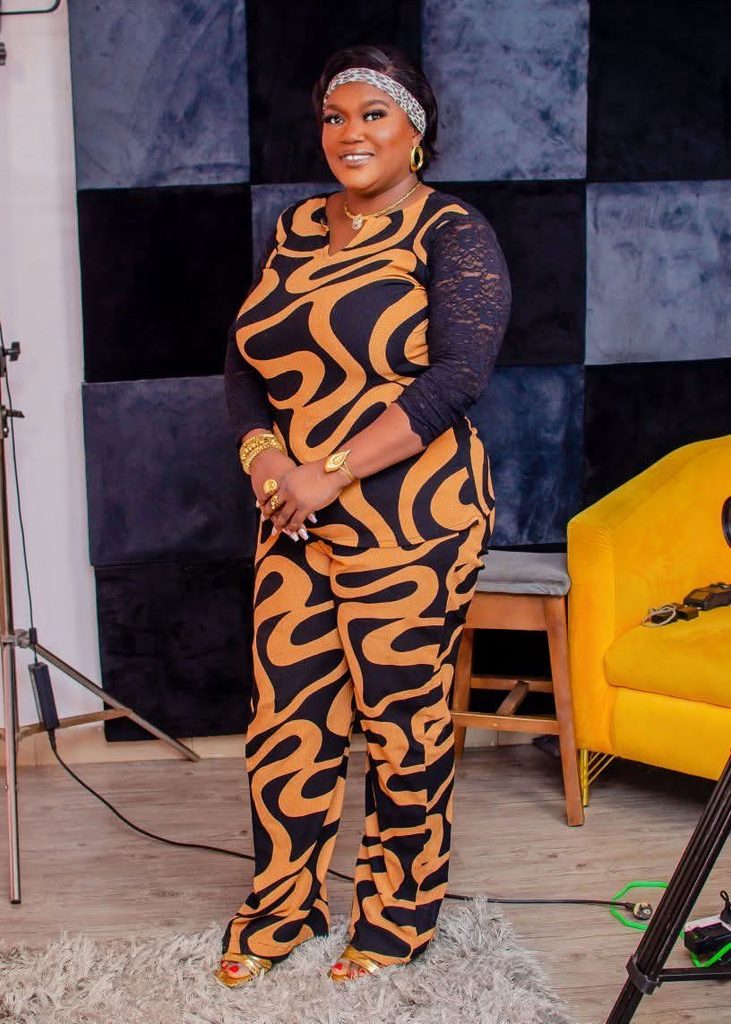
After a decade away from the spotlight, Kogi State-born Nollywood actress, filmmaker, storyteller and content creator Bunmi Nelson is back—and she is returning with a renewed sense of purpose.
Creekvibes Nollywood Spark of The Year 2026, popularly known as Sexy Choco, has built a career that extends beyond acting. She is also a podcaster, motivational speaker and coach, using her platforms to tell stories, inspire audiences and speak for people whose voices are often ignored.

Her latest project, “Tell It To Bunmi” (TITB), is a podcast produced from Bunmi Nelson’s studio and streamed across YouTube, Instagram and other social media platforms. The programme explores difficult and sensitive experiences involving sexual abuse, rape, exploitation, stigma and dehumanisation, creating a space where survivors and victims can share their stories and begin conversations around healing and accountability.
Her return to acting has also been impressive. Bunmi is currently part of the cast of “Debbie’s Salon,” a drama series airing Monday to Friday on DStv Channel 154, where it has attracted attention from viewers of Africa Magic Family and other audiences.
Speaking exclusively to CreekVibes, Bunmi opened up about her journey into Nollywood, the challenges she encountered in the early years of her career, why she stepped away from the industry and what audiences should expect from her comeback.
A difficult beginning
Bunmi recalled that her entry into Nollywood in 2000 came at a time when the industry operated very differently from today.
“My first five years were largely about auditions and constantly moving around in search of opportunities,” she said. “You could attend several auditions before getting a script or even a serious call-back.”
According to her, aspiring actresses faced challenges ranging from financial hardship and sexual exploitation to discrimination based on physical appearance.
She recalled that marketers wielded considerable influence over film productions, particularly when it came to casting and publicity.
“There was a strong preference for fair-skinned actresses, especially on movie posters. As someone with naturally dark skin, I often felt that I was not getting the opportunities my talent deserved,” Bunmi explained.
She said the industry’s structure at that time made it especially difficult for upcoming actors because social media, YouTube and streaming platforms had yet to transform the way films and performers reached audiences.
“The industry has changed tremendously,” she said. “Today, an actor can create a monologue independently and build an audience. Back then, you depended heavily on marketers and established producers.”
The darker side of auditions
Bunmi also described what she said were questionable practices that some aspiring actresses encountered during auditions.
According to her, individuals sometimes posed as producers or directors and used fake casting opportunities to exploit actresses.
“Some people impersonated producers or directors. They would promise actresses major roles, but in reality, they had no power to offer those opportunities,” she alleged.
She said such experiences contributed to frustration among young actors, particularly those who entered the industry without formal theatre training or strong professional networks.
For Bunmi, survival depended on learning how the industry worked and building relationships with trustworthy professionals.
“I stayed close to people I trusted, including makeup artists and members of the welfare team. That helped me remain available whenever I was needed on set,” she said.
From East to the Yoruba film industry
Her breakthrough eventually came through a producer from the eastern part of the country who noticed her performance and reached out through her director.
That connection opened doors for Sexy Choco to work across several production centres, in Onitsha, Asaba and Enugu, where she shared screen space with notable actors such as the late Muna Obiekwe, Fidelis Duker, Tajudeen Adepetu, Mike Ezuruonye, the late Saint Obi, Patience Ozokwor, otherwise known as ‘Mama G’ and Bob-Manuel Udokwu, among others.
She has also worked with production outfits such as Amaco Investment, Grand Touch Pictures, Great Pictures and a couple of others.
Yet, despite the opportunities, Bunmi believes her skin tone affected the scale of roles available to her.
“Looking back, I believe I was sometimes short-changed because of the colour of my skin,” she said.
Her versatility eventually took her into the Yoruba movie industry, which is a major sector of Nigerian cinema, following an introduction by actor Kelvin Ikeduba.
She subsequently worked with prominent actors including Femi Adebayo, Mercy Aigbe, Yomi Fash-Lanso and a couple of others, gaining exposure to a different culture of filmmaking.
Bunmi said she found the Yoruba sector particularly collaborative.
“There is a spirit of collective effort. The expression ‘wa ba mi se’—come and help me do it—captures that culture of supporting one another on productions,” she noted.
Why she walked away
Despite her growing presence in Nollywood, Bunmi eventually stepped away from the industry for a decade due to relationship-related issues.
Rather than seeing the period as a setback, she describes it as a season of reflection, personal rebuilding and spiritual discovery.
“I needed to step away, redefine myself and understand God’s purpose for my life,” she said.
The break, she explained, gave her an opportunity to grow beyond the identity of an actress and explore other dimensions of her creativity and personality.
That period ultimately paved the way for the emergence of Tell It To Bunmi, where her experience, empathy and storytelling skills converge.
Cyberbullying
She recently came under intense criticism on social media over comments she made about Nollywood actress Funke Akindele, whom she referred to as “Lafunky,” during a podcast hosted by Abiola. She reportedly admitted that she had missed an opportunity to work with Akindele because she underestimated the actress’s influence and capabilities at the time. Reflecting on the experience, she emphasised the importance of humility and respect, saying, “Do not look down on anyone except you are admiring their shoes.” Her remarks underscored the need to value people regardless of their present status or perceived influence.
A new chapter
Now back in Nollywood, Bunmi says she is approaching the industry with a different mindset.
Her comeback is not merely about securing roles; it is also about using her voice and visibility to address social issues and inspire people.
“I am not returning just to act. I am returning with a message, experience and a clearer understanding of who I am,” she said.
She also believes the emergence of digital platforms has created greater opportunities for actors who may once have struggled to gain recognition.
YouTube, streaming services and social media, she observed, have reduced some of the barriers that once stood between performers and their audiences.
“Today, your talent can speak for you beyond the traditional gatekeepers,” she said. “The audience can discover you directly.”
Looking beyond the screen
Bunmi’s story reflects the changing face of Nollywood—a transition from a heavily marketer-driven industry to one increasingly shaped by digital platforms, independent creators and direct audience engagement.
Her journey also highlights the resilience required to remain relevant in an entertainment industry known for its unpredictability.
As she settles into her new chapter, Bunmi Nelson is combining acting with advocacy, storytelling and mentorship, determined to make her return count.
“I have been away, but I was never lost,” she said. “I used that time to rebuild, learn and prepare for the next phase.”
And with “Debbie’s Salon” earning viewers’ attention and “Tell It To Bunmi” opening difficult but necessary conversations, Sexy Choco appears ready not only to return to Nollywood, but to redefine what her place in the industry can be.
Remove leisure
Leisure
It may surprise many to discover what our award-winning media personality enjoys doing in her leisure time. Away from the glitz, glamour and demands of the entertainment industry, she has a fascinating mix of interests.
She loves long-distance driving, finding pleasure in the freedom and adventure that come with being behind the wheel. She also enjoys the company of eloquent and intellectually engaging people, especially those who can hold stimulating conversations.
Literature is another major part of her world. She is an unapologetic bookworm who does not joke with anything literary, constantly feeding her mind with books and ideas. She is also a fantastic cook, if you ever had an opportunity to taste her food.
But here comes the revelation that may leave many pleasantly surprised: she loves kissing—long, passionate kisses! It is perhaps the most unexpected item on her list of favourite leisure pursuits, adding a playful and intriguing side to the personality of the widely celebrated media personality.