Capt Nuhu: Govt Support Made Our Lives Healthier Within Our Regulations
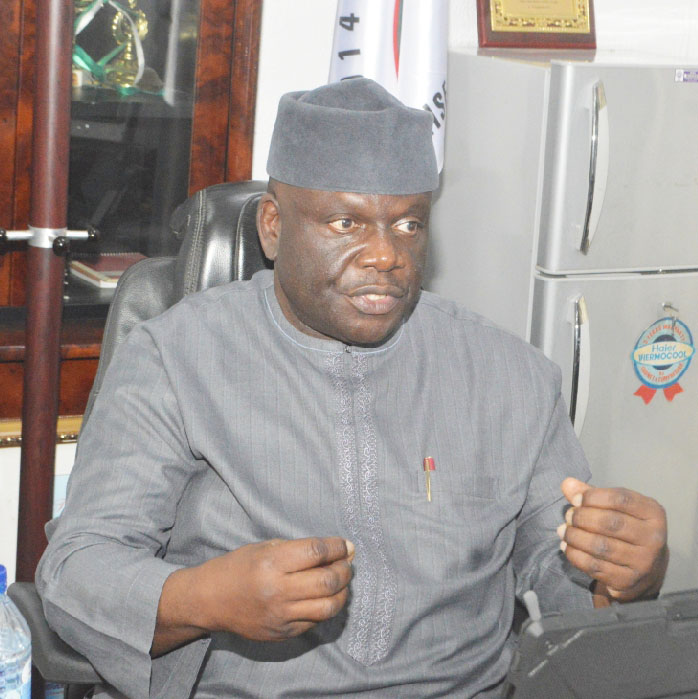
Captain Musa Nuhu, the director general of the Nigerian Civil Aviation Authority (NCAA) is a reputable airline pilot and aviation safety expert with well over 30 years of cognate working experience in both local and international aviation industry. In this interview with Creekvibes OLUDANIELS, the aviator speaks on NCAA autonomy, airlines’ operations, covid-19 and other issues.
How autonomous is the NCAA?
The Nigerian Civil Aviation Authority (NCAA) has autonomy in terms of regulations but NCAA cannot totally remove itself from the ministry of aviation. The ministry is responsible for policy development for the industry and we implement those policies through our regulations. So we must have a line of communication and consultations with the ministry; also if you look at the organisational structure of NCAA, we have the Minister, the board and then the DG. We cannot totally isolate ourselves from the ministry but l can assure you, in term of implementing regulations and otherwise, NCAA is the only body that is doing that and we are doing that without sort of interference with the ministry. There are some regulations that without the political support of the ministry, it will be very difficult to implement those regulations. In the past, when aircraft are grounded, big men went over above the ministry, they even went to the Villa and they have those decisions taken by NCAA reversed, but this time around, it is not so, we implement our regulations irrespective of who is involved and the support of the minister. The political support has made our life easier within our regulations. So anybody that want us to divorce completely from the ministry is not being realistic, it is ministry of aviation. Aviation goes beyond NCAA, we have other public service providers like FAAN, NAMA, NIMET, AIB, NCAT, then the private sector, airline operators, ground handlers all under the ministry; we regulate them, so there are connections between us and the ministry. You cannot say, because we are independent in implementing regulations, we mustn’t have some relationship with the ministry. It happens everywhere in the world. In the US, the Federal Aviation Administration (FAA) has some connection with the department of transportation. What is important is for the regulatory body to be able to do it statutory responsibility of effective oversight of the system without interference and that is what we are doing.
What is the economic health of domestics airlines?
The situation of airlines is a global thing. In the airline industry, the profit margin is very minimal, if you make five percent profit margin in the business, you are considered to have done excellently well. However, with the Covid-19 and the difficulties, airlines financial positions are not the best, it is a global phenomenon and there are so many other issues that affects the financial status of airlines that is neither in the control of the ministry of aviation nor in the control of the civil aviation regulatory body. For instance, the provision of foreign exchange, it doesn’t come from us. If a country’s foreign earning goes down, the central bank prioritises, and you can understand due to the lack of maintenance organisations in Nigeria, pilot recurrent training institutions in Nigeria; pilots have to go outside the shores to attain these recurrent training and it entails a lot of foreign currencies. So it is not easy.
Also is Jet A1, that is a major factor that airlines have been having difficulties with, sometime we see induced scarcity and escalatory price, so there are factors that affect the health of the airlines that are not in our direct control. The ministry has tried, it went to the central bank when this government came on board, Nigeria owed foreign airlines about 600 million dollars in arrears, the minister through consultations was able to get that off our back and all the foreign airlines were paid. We visited the NNPC to see what kind of arrangement can be made for the production of Jet A1 and in addition, interest rate, when airlines go borrowing at a very high interest rate which we know is very high in Nigeria. If my profit margin is 5%, explain to me, if one secures a loan at 20%, how can he/she break even and pay them and make profit? These are the micro and macro factors that affect the health of the airlines.
We try through our economic regulations to do the financial audits of the airlines and advise them where we see areas of economic difficulties and see how they can be tackled. One of the things we are doing is that we want to really strengthen the function of the economic regulation through more training of the staff of the directorate. For your information, some restructuring are going on, it is to reposition the regulatory body to enable it to carry out its responsibilities in a more effective and efficient manner.
Is there any plan to merge NCAA with any other agency?
I read the report in the papers the same way you did, nothing has informed us of any form of merger, l have asked from the ministry and there have been no confirmation. I understand this is an old report done over ten years ago, somebody just sit down and brought it out. I am not aware of any merger between NCAA and any agency and I cannot comment on what seems to me an unofficial matter, and by the way, in the US, FAA is the regulatory body and it runs the air traffic services which is the equivalent of NAMA. So it depends on how you run it.
I am not saying we are going to do it here, but there is a misunderstanding that there is something like that. FAA has a specific structure designed in their case to ensure that, there is no conflict of interest. I am not aware of any merger in Nigeria because I have not been given any document officially.
What can you say about the ill treatment of Nigerian airlines abroad?
The advice I will give airlines is that, if you are going to another country to negotiate your services, you should involve the regulatory body, the ministry of aviation and also your embassy in that country. If you as a private organisation go and negotiate with a government entity that is trying to protect its own airlines, you are going to run into difficulties in the long run. However, when you involve the ministry of aviation officials, NCAA officials and embassy officials, the country knows that if they make things difficult for our airlines, we will apply the same reciprocity measures to their airlines, so it make a big difference. A lot of airlines go and do the deal themselves. They should involve us, carry us along and brief us because we are here to help our airlines grow both domestically, regionally and internationally. I hear them talking about aeropolitics; yes, an airline from Nigeria want to go compete with an airline of another country on their route, of course they will make it difficult for you but when you carry NCAA officials along, it makes a difference. If you unreasonable demand on my airlines, I will apply the same to your airlines coming into my country, so it is to their benefits for every country to come out with good terms for all the airlines. When airline are going to foreign countries to negotiate, inform us so that we will sit down with you, guide you, send representative there with you to negotiate with these foreign countries. If the foreign countries have airlines coming to Nigeria and they give unfair charges to our airlines, we will apply the same reciprocal charges to their own coming into Nigeria too. When we have BASA, there should be fairness in both sides; if there are challenges, they should inform us but if they are going for the first time, they should equally involve us so that we sit down, strategise and send people there to negotiate.
How has Covid-19 affected your plans for the industry?
The discussion I had during the meeting after my hand over from the acting DG, was Covid 19. By then it was not yet declared a pandemic but we could see the trend coming. So we had started putting measures in place. Firstly, we looked at how we are going to run the NCAA as an organisation and business continuity plans in place; how our staff will be working with the development to ensure that whatever happens, we will have people that will be running the organisation regardless of the covid-19 pandemic challenges. We ensured we have somebody who will step in; we prepared to reduce the workforce, a lot of them will stay at home, we ensure we have enough manpower that will run the day-today activities of organisation.
That was even before the government came out with the directives and we were already working on our formation. Basically at that time, it was the issue of survival, whatever plans has to be put in place, because whatever plans you have, if you don’t survive, your plan are of no use. First of all, we have to survive, ensure the organisations survives, and to put in place survival measures for the industry, it certainly delayed our plans but now with the successful resumption of domestic flight and we have not had a significant spike and contamination cases. So all the plans have been delayed but we have successfully resumed the domestic operations, perhaps one or two minor hitches there, nothing significant, and I know you will agree with me so far so good.
Again, the responses from the public complying with the protocols have been excellent. We have started the international flight operations successfully, shortly we will increase the numbers of flights coming in.
We were able to identify some hitches that were rectified and we hope things will get much better going forward. So part of the plans we had is repositioning the regulatory body to be more resilience and a body that is flexible to react to changing situation. Part of the restructuring we have had is part of this process and in the coming months, we will see the organisation in a good position to deal with emerging challenges. As it is, the Covid-19 has changed the global industry, the rapid changes in technology is also changing the industry, not only aviation but also the ways businesses are conducted. We have to reposition ourselves to fit into that so that we can effectively conduct our regulatory responsibilities.
Has any country barred from Nigerian airspace approached you for negotiation?
I am not aware of any approach by any of these foreign countries. They might have done it, it is possible, I am not saying they have done it, I am just speculating because they could have contacted the ministry of foreign affairs and they might also contact PTF. I am not aware of any but I have heard a lot of complains. However, no country has approached us for this.
What is your reaction to the Scrapping of Consumer Protection Directorate in NCAA?
I think there is a misunderstanding. Consumer Protection has not been scrapped. It was just downgraded from a full directorate to a unit under the Directorate of Air Transport Regulation (DATR) which is what it used to be. Consumer protection exists in full with all the functions it has. We still have consumer protection, it has never been scrapped. If you go to the airport, you will see staff of that unit carrying out their jobs without any reduction in their scope.
What strategies do you advise airlines to adopt on how to run their businesses optimally?
Each airline has it own business model, so running an airline has a number of issue that can impact the running of the airline and one of these is corporate governance, separation of ownership from the day to day management of the airline business, for a lot of airlines in Nigeria there are no proper guidelines separating the owners of the airline from its management.
Over the years, such attitude has contributed to the difficulties and challenges a lot of airlines have. Once the civil aviation act is passed by the national assembly and we have a new mandate, we intend to look at that regulations also maybe with the cooperate affairs commission we will sit down and see how we can apply some of these corporate governance issues in our regulations strictly and resolve some of these difficulties we have been facing and one of the things we are going to do is that the directorate of air transport regulations will be empowered and also enhance their skills and knowledge to really study the business models and plans of airlines and see how effective they can be and we can have a more positive regulatory function, we are doing it now but I believe we need to build more capacity in that department.
How will the covid-19 palliative fund disbursed to airlines?
What I can guarantee you is that anybody can apply, it is their right, whether they are functioning or not. However, the issue of palliatives is a policy of the federal government being driven by the minister of aviation and they have their guidelines. One of such guidelines is that you must be a functioning and performing airline before you get any palliative that is all I can say. The Airline Operators of Nigeria (AON), are also part of the bodies involve, they know who and who will get these palliatives from the guidelines. I don’t expect them to put airlines that are not functioning into that list. I can guarantee you, from the government side; if you are not functioning, forget it. You can try your luck it doesn’t mean you are going to get it.