
Zelenskyy: A suit is a costume
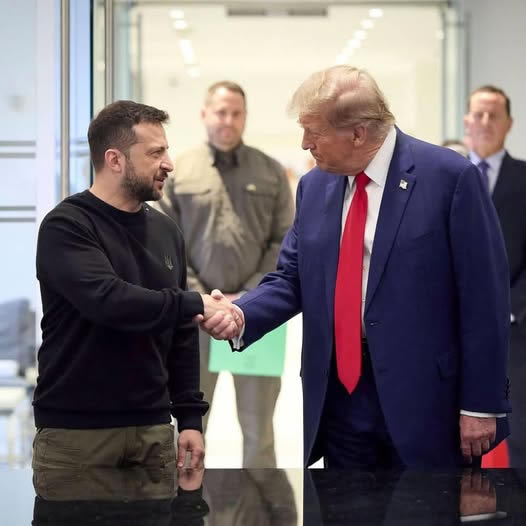
The recent display of disrespect toward the people of Ukraine and the undiplomatic treatment meted out to their President, Volodymyr Zelenskyy, during his meeting with U.S. President Donald Trump at the White House has reignited an age-old debate about formal attire and its significance in leadership and diplomacy.
As President Zelenskyy arrived at the White House in his signature military-style outfit—a practical yet symbolic choice reflecting Ukraine’s ongoing war—President Trump couldn’t resist commenting on his guest’s preferred attire. Later, during a press conference in the Oval Office, a journalist directly asked Zelenskyy, “Why don’t you wear a suit?”
Zelenskyy’s response was both simple and profound: “A suit is a costume.”
This statement, though brief, carries deep meaning. It challenges the traditional notion that leadership is defined by appearance rather than action. It suggests that a suit, like any other outfit, is merely a social construct—a uniform of power that does not necessarily equate to capability, integrity, or effectiveness in governance.
For centuries, suits have been considered the gold standard of professionalism, worn by business leaders, politicians, and dignitaries worldwide. This expectation has created an unwritten rule that formality equals authority. However, Zelenskyy’s words invite a broader conversation: Should attire dictate respect and credibility, or should an individual’s actions and decisions speak louder than their clothing?
For Zelenskyy, his preference for military-style attire since Russia’s invasion of Ukraine is not just about comfort or personal style—it is a deliberate statement. It signifies his solidarity with his troops and his country’s struggle for survival. His attire is a reminder that he is a wartime leader, focused on the battlefield rather than the boardroom. In such a context, wearing a suit would be out of place, even performative.
In Igbo culture, it would be taboo for an Eze or titleholder to wear a suit—a mere costume—at traditional and cultural events. As custodians of the culture and traditions of their people, Nde Eze, Nze na Ozo, and other titleholders must, at all times, dress in regalia that represent the people and befit their positions.
Similarly, across different cultures, traditional attire often holds deeper significance than Western-style suits. African leaders, Middle Eastern sheikhs, and Asian dignitaries frequently wear garments that reflect their heritage rather than conforming to Eurocentric standards of professionalism. The idea that a suit is the only “official” dress code is both outdated and exclusionary.
While a suit is widely regarded as a symbol of professionalism, it does not inherently grant competence or leadership qualities. Some of history’s greatest leaders have defied conventional dress codes. Mahatma Gandhi famously abandoned Western-style clothing in favor of a simple dhoti, reflecting his commitment to India’s independence and self-reliance. Steve Jobs, one of the most influential innovators of the modern era, was rarely seen in anything other than a black turtleneck and jeans.
These examples reinforce the idea that dressing appropriately should be determined by tradition, occasion, and purpose—not by rigid, one-size-fits-all expectations. A head of state in a war-torn country may opt for practical, symbolic clothing rather than a suit. A business executive in Silicon Valley may choose smart-casual attire over a tie and blazer. A tribal leader or religious figure may wear garments that reflect centuries of cultural heritage rather than Western formal wear.
The world is evolving, and so should our perceptions of professionalism and leadership. While a suit remains a respectable and widely accepted choice for some, it should not be seen as the only mark of authority. People should be allowed to dress according to what aligns with their identity, culture, and the demands of their roles.
Zelenskyy’s statement—“A suit is a costume.”—is a reminder that clothing should never overshadow competence, character, or commitment to duty. Whether in politics, business, or any other sphere, the focus should be on substance over style, action over appearance, and leadership over labels.
People should be free to dress in a way that aligns with their culture, role, and personal expression. You can’t force a dress on people just that you can’t force friendship.
At the end of the day, a suit is just that—a costume. True leadership is measured not by what one wears, but by what one does.
Culled from Enyinnaya Appolos’ Facebookpage