
Rector NCAT, Danjuma Adamu Ismaila: I Am Currently Facing Difficulties In Obtaining Govt Support To Develop Equipment, Infrastructure
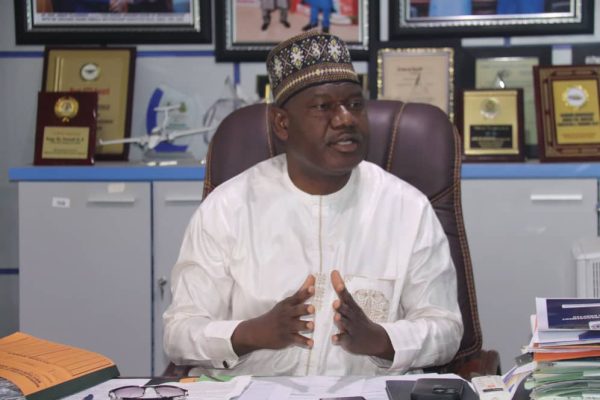
Dr. Danjuma Adamu Ismaila serves as the Rector and Chief Executive of the Nigerian College of Aviation Technology (NCAT). He is an expert in air transportation management, transport economic policy, and aviation security, possessing a wealth of experience in the aviation sector. Recently, he was appointed by President Bola Ahmed Tinubu. In this interview, the Rector discussed his initiatives to reposition the College, the challenges he faces, and his expectations from the government.
Excerpts:
How are you dealing with the rising enrolment and infrastructure to cater for the students and other professionals?
This is one of the challenges I am currently encountering here. The directive given to me was to reposition the college in a manner that would render it financially independent, enhance its revenue, and also amplify its impact not only within Nigeria but across the entire African continent. The college possesses the capability to address all the training requirements of the aviation sector and even draw participants from other African nations and beyond.
The aviation industry is a global entity, and any certification you receive here from the NCAA is equivalent to what you would obtain in other regions of the world, as the training adheres to ICAO standards and recommended practices. The standards certified by the NCAA are identical to those certified by the UK CAA. You can pursue your training or licensing in any part of the globe.
This indicates that we have the potential to cater to every region worldwide. For example, a training program for the ATPL certificate, whether obtained here or elsewhere, is recognized equally when certified by the UK CAA. Our CAA is certified by the NCAA, which is also ICAO certified. We have the opportunity to attract participants from all corners of the globe. Some of the courses we offer are conducted in collaboration with ICAO.
We contribute significantly to the generation of foreign exchange for the country. We have the potential to generate substantial foreign exchange for the nation. If by the time our flight simulators commence operations, we anticipate increased participation from Asian nations. Currently, both Nigerian and Asian pilots are waiting in Dubai for the opportunity to attend the flight simulator training. We have the simulator available here and will soon begin its operation. At that point, individuals will be lining up on our side due to its global scarcity, which will generate significant foreign exchange for us.
Another challenge I am facing is related to accommodation. Some of you are here for training, and we have had to provide accommodation outside the facility. It appears that the previous management of the college did not adequately address this issue or were not sufficiently proactive in seeking to develop essential infrastructure.
The Minister of Aviation and I are working tirelessly to find ways to reposition this college. This is a straightforward challenge; it is not technical. It is merely an accommodation issue that is limiting our intake. The college has another program in the pipeline. At present, we are expecting a group from Egypt. They have requested that we organize a program for them on June 16. One of our instrument rating students is interested in training on that date. They are air traffic controllers from Egypt seeking to enhance their skills.
A couple of months ago, we trained participants from French-speaking countries who wished to learn aviation English, but we lack the appropriate infrastructure to attract them. Once we establish the right infrastructure, we can draw in these international students because our fees are competitive compared to other regions of the world. In the US and other locations, individuals struggle to cover hotel expenses due to the dollar exchange rate, but when they come here, they find that our rates are very affordable, even though many of our courses are priced in dollars.
What are you doing to reposition and improve the facilities?
As I mentioned earlier, there are certain infrastructures that are critically needed, and these infrastructures will enable us to position the college effectively. One such necessity is suitable accommodation. Much of the existing accommodation is either in disrepair or not in a condition that we can proudly present as our offering. However, these can be easily renovated or upgraded to meet the standards we aspire to achieve.
Another essential aspect is the provision of classrooms and facilities, particularly technical facilities, for the various courses we offer. There are numerous courses that aviation professionals require, both globally and locally; thus, it is imperative that we have all these facilities in place. Additionally, some of these facilities must continue to be upgraded. Ownership of a facility does not signify the end of our responsibilities. We must persist in enhancing the system, fostering new developments and exploring new areas, which is why substantial investments are necessary.
We aim to ensure that our facilities truly reflect an international standard. Some of our buildings date back to the 1960s, and it is crucial that we modernize them. Students, particularly those accustomed to an international environment, will appreciate our efforts. We must modernize our buildings to achieve international recognition.
We are currently in the process of upgrading our classrooms to meet international standards. We are enhancing our facilities and equipment to accommodate a larger number of students. Some of our clients have a significant number of prospective trainees; however, we are limited in the number of students we can accept, especially in the field of air traffic control.
They have expressed their dissatisfaction with our inability to meet their training needs. We are addressing this issue, such as through the implementation of a 3D simulator that can train many individuals simultaneously. Most of these individuals require this training before they can advance to higher levels. We anticipate increased participation, and with that, we will generate additional revenue.
What is the update on your Simulator and the certification?
There are various types of simulators available, including all the simulators for every aircraft present in Nigeria. We understand that this endeavor will not be straightforward. No nation claims to possess simulators for every aircraft model. Emirates, for instance, has chosen specific aircraft that they wish to focus on. This is a business decision. One should not invest capital in aircraft that are not widely utilized. We will prioritize selecting the aircraft that are in high demand within the country, such as the Dash 8.
If you acquire a Dash 8 and, after a month, find that there is no interest in it, that would result in a waste of resources and capital. It is essential to choose aircraft that are popular in our society or region. The B737 represents the largest number of aircraft in our fleet, which is why we have a flight simulator for the B737.
Based on our analysis, the B737 is indeed the most popular aircraft we have, while the CRJ is also gaining traction. If we could receive support from the government to acquire additional simulators, that would be beneficial. Let us begin with this simulator to assess its acceptance in the market, not only in Nigeria but also on a global scale. Once we confirm its acceptance, we can then pursue additional simulators.
What is your trajectory for 2025?
Forecasting what you l will achieve this year or the next poses a challenge for me, particularly as I am seeking financial support from the government. Only if I secure the funding to enhance my capacity can I make accurate projections. However, if I have already expanded my capacity to a certain level regarding our equipment and infrastructure, I can estimate that I will achieve a specific outcome.
I am currently facing difficulties in obtaining government support to develop this equipment and infrastructure. By next year, once we have secured the necessary resources and established the required systems, we will be in a position to confidently state that by a certain timeframe, this will be our projection.
How much is this funding gap?
I cannot provide an estimate, but I am aware of the projects that I need. There were some low-hanging fruits that were neglected, such as the full flight simulator that was purchased approximately five years ago and is still unused.
I have now established a task force and given them three months to resolve all outstanding issues. Initially, they are discussing the license or certification from the NCAA, and I was able to meet with the NCAA management. I explained our situation, highlighting that the college has made significant investments in this area, including manpower development and training for both our personnel and theirs, resulting in substantial achievements. They have now agreed to come next week to begin processing the certification. Hopefully, within a month or two, our simulator will be operational.
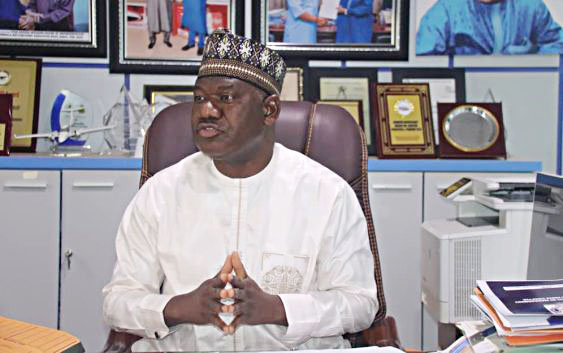
The NCAA has the capability to certify the simulator, and we have trained some of their personnel. If they lack the capacity, they are free to collaborate with their sister agencies. This exemplifies the importance of collaboration and partnership, where one party can assist another in areas of weakness. At this moment, we are not focused on who is coming, whether it is them or their partners.
What measures are you implementing to ensure the retention of these skilled professionals within the College, so that they do not depart from their positions?
Upon my arrival, one of the primary challenges I faced was the high turnover of staff due to inadequate compensation, as we currently offer the lowest salaries among aviation agencies. This situation is hindering our capacity to retain personnel.
A significant number of our trained staff have departed for better opportunities, with some opting for positions in private airlines. Our plan is to implement a policy aimed at enhancing our internal capabilities. We intend to establish a bond agreement and engage with the NCAA to ensure that the certificates awarded to our staff are exclusively for NCAT training purposes, preventing them from using these qualifications to seek employment elsewhere. It is imperative that they remain with us and contribute to our organization.
We cannot invest resources only for them to leave for other opportunities. These are some of the strategies we intend to employ. Additionally, we have reached out to the salaries and wages commission. Just yesterday, I communicated to the relevant parties that the college requires special consideration regarding salary packages to bridge the gap with the industry.
This approach mirrors what the oil sector has done for the petroleum training institute, where there is minimal salary disparity with the oil industry, enabling them to retain their specialists. We also deserve to be treated similarly. Currently, there exists a significant salary disparity.