We Need Technocrats To Run Our Transport System, Not Learners – MD/CEO Widescope Group, Dr. Amb. Olusesegun Alade Musa
•Encourage Automobile Companies To Concentrate On Producing CNG Powered Vehicles
•I Was Never A Politician

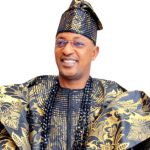
Daniel Ekiye representing Creekvibes TV is delighted to present to you a great philanthropist, a prominent corporate leader, a proponent of positive initiatives, a skilled technocrat, who has an impressive collection of over 190 local and international award recognitions.
He is the Chairman of the National Association of Government Approved Freight Forwarders at the Murtala Muhammed International Airport, Ikeja, Lagos. He is the Group Managing Director and Chief Executive Officer of Widescope Group, a well-known international conglomerate with operations in aviation, maritime, media, and project management, which spans five countries across three continents.
With over thirty years of experience in the maritime sector, he was the gubernatorial candidate for Lagos State, representing the Advanced National Democratic Party (ANDP) in 2019.
Allow me to introduce to you Dr. Ambassador (Chief) Alade Oluwasegun Musa. Good morning, sir, and thank you for honouring Creekvibes Tv interview.
Recently, the Federal Executive Council (FEC) launched the Nigeria-First policy, instructing ministries, departments, and agencies (MDAs) to exclusively purchase locally manufactured vehicles. However, the Bureau is authorized to permit the acquisition of an imported product or service only in instances where there are no locally available options.
In what ways do you think this can help the transport sector?
Thank you very much. You may agree with me that without indigenous capacity, it will be challenging for us to truly revamp the economy. I believe that what the government is attempting to achieve, in the wisdom of its leadership, is to ensure that we can build our local capacity and enhance our transport potentials.
There is nothing wrong with a policy that strengthens local content. Furthermore, I also believe that in addition to fleshing out that policy, the government must invest significant effort in ensuring that we have the necessary infrastructure to support it.
It cannot merely be a policy statement that is strictly enforced through due diligence; it must also provide incentives for local capacity so that we can produce goods that align with our local demands. We need to identify our strengths and our needs, and once we accomplish this, it will encourage us to pursue our national interests in automobile production.
The Nigerian Automotive Industry Development Plan (NAIDP) was initiated in 2023 as a roadmap for the growth of the automotive industry. Till today, it has not been passed into law, what do you think is delaying the implementation?
In my view, I wish to believe that the government has good intentions when formulating policies or working documents. However, there are factors that often cause delays; aside from political will, there may be fundamental elements that have not been incorporated. Frequently, the government will return the proposal to the assembly to examine and integrate the necessary components that will enable it to function effectively.
It is insufficient for a consultant to merely draft a policy or regulation; the approach must be comprehensive. The state actors who will implement this policy and drive their businesses must have a say in the process; otherwise, it may fail to address their fundamental challenges.
Do you think the present government will sign this into law?
I want to believe that the government is genuinely prepared to change the narratives. If the agreement has not yet been signed, I believe there must be a rationale behind it; something the government is considering to ensure it is appropriately signed.
What are the challenges facing road transport in Nigeria?
The fundamental challenges confronting our road transportation system stem from regulation; we conduct our road transport operations in a manner that can be deemed unethical, functioning under what I refer to as a natural phenomenon, where there is an absence of policy and regulation.
Anyone who can afford to purchase a vehicle will simply buy one and place it on the road, disregarding the essential elements that truly drive road transportation. This mode necessitates stringent regulation.

You may concur that we do not solely have cars; we also have buses, lorries, tractors, and a multitude of automotive machines on the road, including bicycles and motorcycles.
These vehicles must be adequately regulated to ensure they do not operate solely under what I term a natural phenomenon, lacking the foundational guidelines that govern their operations. If we can thoroughly examine these issues and if the government collaborates with key stakeholders to develop a feasible framework that facilitates smoother operations within this disorganized sector of transportation, I believe that regulation is fundamental.
Do you think that there could be the possibility of linking road, air, rail and maritime transportation in Nigeria, just like it is at the Birmingham Airport?
Certainly, this is precisely what we have been advocating for; we possess a platform, and we have been promoting these intramodalities where all modes of transportation can function holistically in a symbiotic manner to complement one another.
This will ensure that integration between them is feasible, and I am confident that with the collective efforts being made, the government will recognize the necessity of this integration. Without it, the transportation sector will continue to encounter many of these challenges.
It is essential that it be intermodal, allowing for seamless transitions from one mode to another in order to reduce costs.
President Tinubu just spent two years in his administration. How can you rate his efforts, if any in the areas of transportation?
Me, I think the president is trying he is making frantic efforts, but the effort is not good enough, I think he needs to do more, starting with the appointments of the ministers that superintend over transport, we need to look more into technocrats that has that widen knowledge so that it will not take them a longer time that they would have achieved a lot of results instead of learning on the job.
Transportation is a highly technical job, and we must be able to identify the people that have the widening knowledge that can start the job immediately without learning on the job so that when you saddle them with the responsibility to superintend over it, they can kick start it instantly and know where the problems is and start solving it, so that it won’t be a case of organizing seminars and workshops and at the end of the day the resolution or the communique will be difficult to be implemented.
We need people who have wide knowledge and are ready to take action immediately after they resume office without taking too long time to learn on the job, I think if we can do that and we can formulate a policy that will drive the transportation system, and that will encourage the investors that want to invest in this sector.
There have been campaigns for massive conversion of vehicles from petrol to CNG. Do you think any success has been made in that direction?
I consider conversion to be beneficial; I would prefer, as I mentioned previously, that we begin to motivate automobile manufacturers to start producing vehicles.
We should be encouraging them to develop a type of hybrid or a vehicle that focuses solely on CNG power, so that we can gradually phase out diesel and petrol vehicles. This approach is already being implemented in many parts of the world, where outdated systems are being replaced with modern solutions in their operations.
I don’t see anything bad in it.
RAIL WAY
Lately, there have been incidences of rail derailment in some parts of the country. Are you worried, and what do you think the authorities can do to reduce such incidents?
Firstly, the rail sector is in a dire state. As I was on my way here, I listened to Dr. Opeifa, the Managing Director of the Nigerian Railway Corporation, discussing his efforts in this sector. It is commendable that he is recognizing many of the issues at hand.
We need to conduct a thorough reassessment within the confines of the rail network, implementing checks to ensure that it is not susceptible to attacks. All these assessments must be established so that we can implement corrective measures, as some components have already been compromised by vandals who have removed one or two items.
Routine checks are essential to guarantee the protection of the rail sector’s corridors, similar to practices in other parts of the world.
There must be security checks and surveillance in place to prevent encroachment and vandalism of these rail passages, which could potentially derail trains while in motion. A robust security surveillance system is necessary to restrict access to these corridors, allowing us to safeguard the coaches, wagons, and passengers.
Can you share your experience on Nigeria politics, and when do you think you will want to be involved again?
I was never a politician. I tell people that I only see the opportunity to contest an election and to also contribute my quota to the political system, as at the time I was contesting for governorship, I was not sure that I was going to win the election, but I know that during the beat, part of what I will be contributing might be of help to whoever will be contesting along with me, and when they eventually win the election.
So I was there to test my popularity and to also contribute during the beat parts of the policies I would be talking about could be helpful to whoever eventually wins the election, but that is not to say that if I have the opportunity to contest and win an election I won’t do that but, for now, I am not interested in politics.