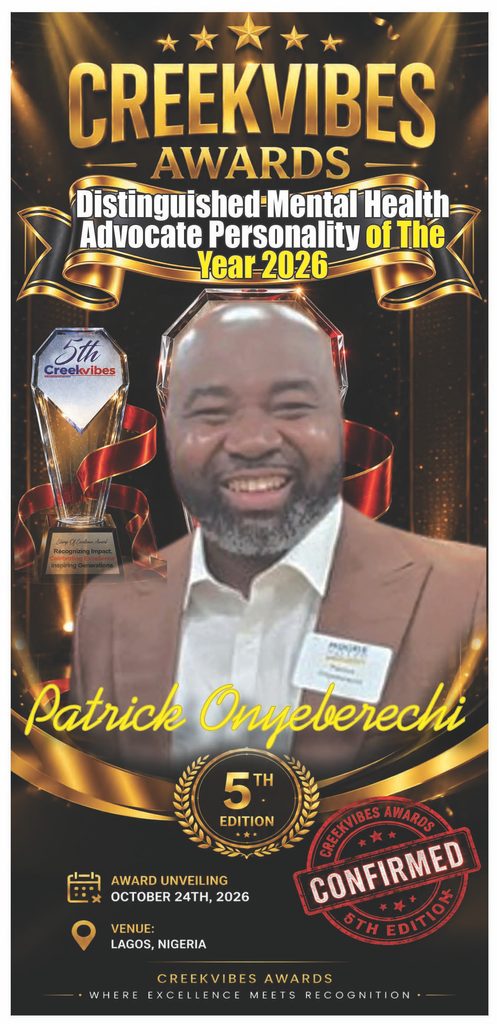
Patrick Onyeberechi: Global Mental Health LLC Meets Professional, Regulatory, Operational Standards


In this exclusive interview, Patrick Onyeberechi, Founder and Chief Executive Officer of Patog Global Mental Health LLC, a licensed Psychiatric Rehabilitation Program (PRP) based in Maryland, United States, shares insights into his professional journey, commitment to mental healthcare, and vision for community development. A healthcare professional, entrepreneur, and passionate advocate for mental health awareness and human dignity, Onyeberechi is driven by the conviction that everyone, regardless of background, financial circumstances, or personal challenges, deserves compassionate care and access to quality mental health services.
Patog Global Mental Health LLC, he is dedicated to restoring hope, promoting independence, strengthening families, and empowering individuals living with mental health challenges. In this conversation, he discusses his mission, the importance of accessible mental healthcare, and why he believes mental well-being is a fundamental human need rather than a privilege.
Excerpt;
WHAT INSPIRED YOU TO ESTABLISH A MENTAL HEALTH FACILITY?
My inspiration came from my passion for humanity and my desire to make a meaningful difference in people’s lives.
Over the years, I have come to understand that many individuals experiencing mental health challenges are not only struggling with their conditions but also with rejection, discrimination, loneliness, and a lack of adequate support.
I established Patog Global Mental Health LLC because I believe that people living with mental health conditions deserve more than sympathy. They deserve professional support, dignity, opportunities, and a genuine chance to rebuild their lives.
For me, establishing this organization is more than a business venture. It is a mission of compassion, service, and restoration of human dignity.
WHAT HAS BEEN THE MOST CHALLENGING PART OF BUILDING AND SUSTAINING THE FACILITY?
One of the greatest challenges has been establishing a healthcare organization that meets professional, regulatory, and operational standards while maintaining a strong commitment to quality services.
Mental healthcare requires qualified professionals, proper documentation, effective leadership, financial investment, and continuous compliance with healthcare regulations.
Another challenge is finding dedicated professionals who understand that mental healthcare is not merely employment but a responsibility to vulnerable individuals.
However, I see these challenges as opportunities to build a stronger institution. My philosophy is simple: We must never compromise the quality of care because of the difficulties involved in delivering it.
APART FROM PSYCHIATRIC REHABILITATION, WHAT OTHER FORMS OF MENTAL HEALTHCARE DO YOU PROVIDE?
Our primary licensed service is the Psychiatric Rehabilitation Program, commonly known as PRP.
Through this program, we focus on helping individuals develop the practical, social, emotional, and independent living skills necessary to function effectively within their communities.
Our rehabilitation support includes:
– Independent living and daily life skills development.
– Social skills training and community integration.
– Behavioral management and coping skills.
– Employment readiness and vocational support.
– Housing assistance and connection to community resources.
– Community safety, advocacy, and rehabilitation support.
– Support with accessing appropriate healthcare and social services.
We also recognize the importance of collaboration with licensed mental health professionals and other healthcare providers when clients require services outside our authorized scope.
As an organization, we are interested in expanding our services in the future, subject to the necessary approvals and licensing.
Our ultimate vision is to develop a comprehensive mental healthcare organization where individuals can access coordinated services that support their recovery and independence.
WHY DO YOU THINK MANY NIGERIANS STILL FIND IT DIFFICULT TO SEEK PROFESSIONAL HELP FOR MENTAL HEALTH PROBLEMS?
I believe one of the greatest barriers is stigmatization.
In many Nigerian communities, mental illness is still misunderstood. Some people associate psychiatric conditions with spiritual attacks, curses, personal weakness, or shame.
Consequently, individuals who need professional intervention may remain silent because they fear being judged, rejected, or labeled.
Other barriers include poverty, limited access to mental health professionals, inadequate public awareness, and the cost of treatment.
I respect our cultural and religious beliefs, but I strongly believe that faith and professional medical treatment should not be seen as enemies.
Prayer can provide spiritual comfort, but people experiencing mental health conditions should also have access to appropriate professional assessment and treatment.
We must create a society where seeking mental healthcare is regarded as an act of responsibility rather than a source of shame.
HOW DO YOU PROTECT THE PRIVACY, DIGNITY, AND RIGHTS OF PATIENTS RECEIVING TREATMENT AT YOUR FACILITY?
At Patog Global Mental Health LLC, protecting clients’ privacy, dignity, and rights is a fundamental responsibility.
As a Maryland healthcare organization, we operate within applicable privacy, confidentiality, and healthcare regulatory requirements, including HIPAA where applicable.
Our approach emphasizes confidentiality, professional boundaries, respectful communication, informed participation, and the responsible handling of client information.
We believe that every individual deserves to be treated with dignity regardless of diagnosis, race, religion, nationality, or financial circumstances.
We also believe that clients should have a voice in their rehabilitation goals and decisions about their care.
A mental health diagnosis should never take away a person’s humanity, dignity, or fundamental rights.
IS YOUR PROFESSIONAL PSYCHIATRIC MENTAL HEALTHCARE AFFORDABLE AND ACCESSIBLE TO THE AVERAGE NIGERIAN?
Our facility is currently based in Maryland, United States, and our licensed PRP services operate within the American healthcare system.
For eligible individuals, covered rehabilitation services may be accessible through Maryland Medicaid, subject to applicable eligibility, medical necessity, authorization, and program requirements.
We do not currently operate a licensed mental healthcare facility in Nigeria, so I would not want to give the impression that our Maryland program is directly available to the average Nigerian living in Nigeria.
However, making mental healthcare more accessible and affordable is something I strongly believe in.
My long-term vision includes exploring opportunities to support mental health awareness, community education, and partnerships that could benefit Nigerians.

Mental healthcare should never become a luxury reserved only for wealthy individuals.
HOW CONCERNED ARE YOU ABOUT PSYCHIATRIC MENTAL HEALTH PROBLEMS AMONG NIGERIAN YOUTHS?
I am deeply concerned.
Our young people represent the future of Nigeria, and their psychological and emotional well-being must be treated as a national priority.
Many young Nigerians are facing tremendous pressure from unemployment, family expectations, economic uncertainty, relationship difficulties, and the constant struggle to achieve success.
Unfortunately, some suffer silently because they do not have safe environments where they can openly discuss their emotional challenges.
We must understand that mental health challenges do not discriminate based on age.
A young person can appear physically healthy, academically successful, or socially active while experiencing significant emotional distress.
Parents, educational institutions, religious organizations, community leaders, and government agencies all have important roles to play.
If we neglect the mental health of our youths today, we risk weakening the foundation of our society tomorrow.
WHAT IMPACT ARE SOCIAL MEDIA, CYBERBULLYING, UNEMPLOYMENT, ACADEMIC PRESSURE, AND ECONOMIC HARDSHIP HAVING ON YOUNG PEOPLE’S PSYCHIATRIC HEALTH?
These factors can have significant consequences for young people’s emotional and psychological well-being.
Social media has many advantages, but excessive comparison, online harassment, unrealistic expectations, and the pressure to display a perfect lifestyle can contribute to anxiety, low self-esteem, and emotional distress.
Cyberbullying can be particularly damaging because victims may experience humiliation, fear, and isolation even within their own homes.
Unemployment and economic hardship can also create frustration, hopelessness, and uncertainty about the future.
Academic pressure may lead some students to believe that their entire value as human beings depends on examination results or educational achievements.
However, these factors do not affect everyone equally, and not every young person experiencing such pressures develops a mental health condition.
We must encourage healthy communication, responsible social media use, access to counseling, supportive parenting, and early professional intervention.
Most importantly, we must teach young people that their worth is not determined by their financial success, social media popularity, or academic performance.
WHAT WOULD YOU SAY TO SOMEONE WHO IS STRUGGLING MENTALLY BUT IS AFRAID OR ASHAMED TO SEEK HELP BECAUSE OF STIGMATIZATION?
My message is simple:
You are not alone, and your mental health condition does not define who you are.
Experiencing depression, anxiety, emotional distress, or another mental health condition does not mean you are weak, inferior, or less valuable than anyone else.
Just as people seek medical attention for physical illnesses, there is absolutely nothing shameful about seeking professional support for mental health challenges.
Do not allow the fear of people’s opinions to prevent you from receiving the help you deserve.
Speak to someone you trust. Consult a qualified mental health professional. Take your emotional well-being seriously.
Recovery and improvement are possible, and seeking help can be the beginning of a better chapter in your life.
Your life matters. Your dignity matters. Your mental health matters.
IF YOU HAD THE OPPORTUNITY TO SPEAK DIRECTLY TO THE NIGERIAN GOVERNMENT ABOUT PSYCHIATRIC HEALTHCARE, WHAT WOULD YOU ASK THEM TO DO?
I would respectfully encourage the Nigerian government to recognize mental healthcare as an essential component of national development.
A country cannot achieve sustainable progress without investing in the physical and psychological well-being of its citizens.
I would recommend greater attention to the following priorities:
1. Increase investment in public mental health facilities and professional training.
2. Integrate mental healthcare into primary healthcare services across communities.w
3. Expand affordable mental health coverage and financial support for vulnerable populations.
4. Introduce stronger mental health awareness and counseling initiatives in schools and universities.
5. Strengthen the implementation of laws protecting the dignity and rights of people living with mental health conditions.
6. Support community-based rehabilitation, early intervention, and suicide prevention programs.
7. Encourage responsible partnerships between government, private healthcare providers, nonprofit organizations, and community institutions.
I would particularly emphasize the importance of extending mental healthcare beyond major cities into underserved rural communities.
Mental healthcare should not be treated as an afterthought in national healthcare planning.
WHAT IS THE ONE THING YOU WANT NIGERIANS TO UNDERSTAND ABOUT MENTAL ILLNESS THAT THEY MAY NOT UNDERSTAND TODAY?
The most important message I want Nigerians to understand is that mental illness is a health condition, not a character defect, spiritual condemnation, or reason to discriminate against another human being.
Mental health conditions can affect people from every family, profession, educational background, religion, and social class.
Having a psychiatric diagnosis does not automatically mean that someone is violent, incapable, or unable to live a productive life.
With appropriate treatment, rehabilitation, family support, and community acceptance, many individuals living with mental health conditions can pursue meaningful and fulfilling lives.
We must replace ignorance with education, discrimination with acceptance, and rejection with compassion.
Mental illness should be treated with care, not condemnation.
WHAT LEGACY DO YOU HOPE THIS FACILITY WILL LEAVE IN THE LIVES OF THE PEOPLE YOU SERVE?
My greatest desire is to build an institution that will be remembered not merely for its name or physical facilities, but for the lives it has positively transformed.
I want Patog Global Mental Health LLC to become synonymous with compassion, professionalism, integrity, quality healthcare, and the restoration of human dignity.
I want individuals who come through our program to feel respected, supported, empowered, and hopeful about their future.
I want families to regain hope, communities to become more inclusive, and individuals facing mental health challenges to understand that their conditions do not eliminate their potential.
Beyond my lifetime, I hope the organization will continue to serve humanity, inspire future healthcare professionals, and contribute to a society where mental healthcare is accessible, respected, and free from unnecessary stigma.
For me, true success is not measured only by financial achievements or the size of an organization. It is measured by the positive difference we make in people’s lives.
If one individual regains hope, one family finds relief, and one person rediscovers their purpose through our services, then our mission is already making a meaningful difference.
CLOSING REMARKS
I sincerely appreciate this opportunity to discuss a subject that is very important to me.
My appeal to Nigerians, both at home and in the diaspora, is that we must begin to take mental health as seriously as physical health.
Let us build families that listen, communities that support, institutions that protect, and a society that treats every human being with compassion and dignity.
At Patog Global Mental Health LLC, our guiding philosophy remains:
“Your Well-Being Is Our Concern.”
Thank you very much.
•Patrick Onyeberechi
Founder & Chief Executive Officer
PATOG GLOBAL MENTAL HEALTH LLC
Maryland, United States of America
Pat@patogglobalmentalhealth.com
www.patogglobalmentalhealth.com.